
Serving the U.S. and clients worldwide since 2004
Inheritance and probate

Do I Need an Apostilled Will or Probate Order to Claim Property Abroad?
Practical guide · 7 min read · August 10, 2026

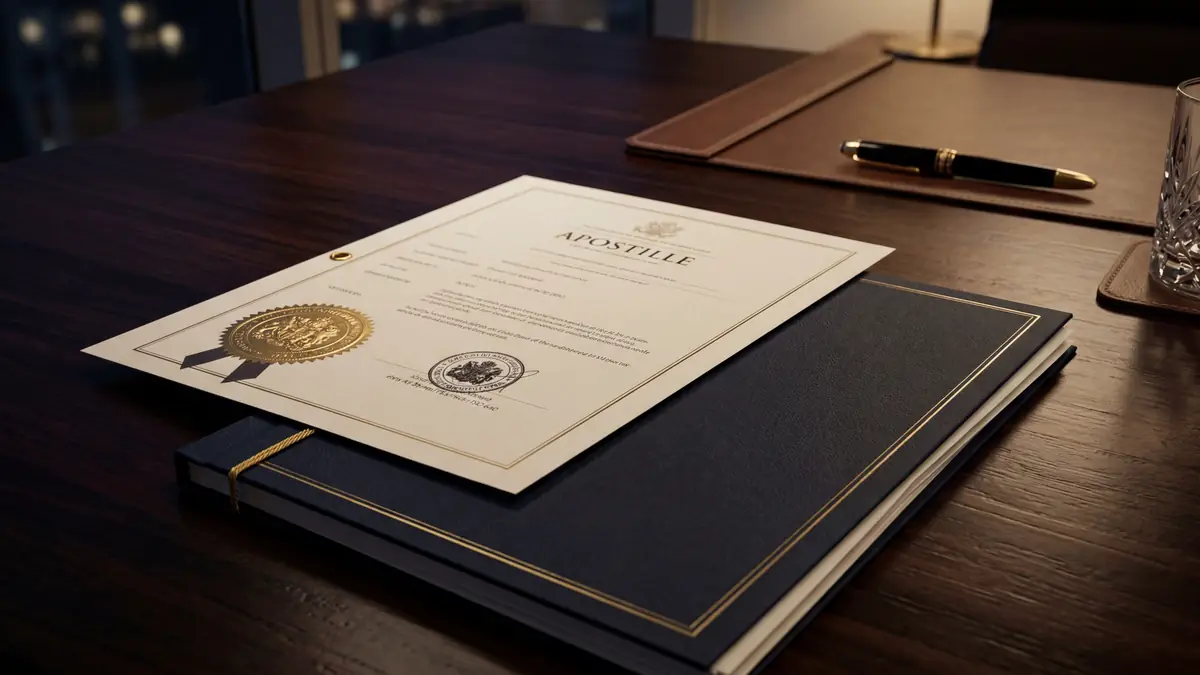
Certificate and apostille seal on a desk
Illustrative image; does not represent an official document.

When U.S. property is part of an estate and needs to be transferred or claimed from abroad, the receiving registry or notary usually asks for more than just the will: a court document confirming the court already got involved in the case. This guide explains the difference between a will and a probate order, who issues each one in Florida, and how the apostille works for each document.

Quick summary

A will is a private document; a probate order or letters of administration is a different, court-issued document. In Florida, it's obtained as a certified copy from the Clerk of the Circuit Court in the county where the case was filed, an authority different from the Bureau of Vital Statistics. You need an original certified copy, not a photocopy, and the apostilled order alone generally isn't enough: confirm with the receiving registry what other documents it requires, and consult an attorney on any inheritance or property rights questions.

Will vs. probate order: two different documents

A will is the private document in which a person expresses their wishes for how their assets should be distributed. A probate order, also known as letters of administration or an order admitting the will, is a different document: it's the court's official record, either admitting the will to a probate proceeding or appointing an administrator of the estate when there's no will or the court designates that person. Many registries or notaries abroad specifically ask for this court document, not just the will, as proof that the court has already validated the probate process.

Who issues the probate order in Florida

Unlike the death certificate, which comes from the Bureau of Vital Statistics, a probate order or letters of administration is obtained as a certified copy from the Clerk of the Circuit Court in the Florida county where the probate case was filed. This is a completely different authority: the Clerk of the Circuit Court administers the county's court records, not the state's vital records. This same pattern repeats with other Florida court documents, such as divorce judgments, which also come from the county clerk rather than the Bureau of Vital Statistics.

How it's apostilled: the same state authority, a different signature

Although the death certificate and the probate order come from different issuing authorities, both are apostilled before the same Florida apostille authority: the Florida Department of State (Division of Corporations). The difference is which signature gets verified: for the death certificate, the State Registrar's signature is confirmed, while for the probate order, the signature of the Clerk of the Circuit Court in the relevant county is confirmed. That's why, even though both documents end up at the same apostille office, each one requires its own request.

We can help you confirm which documents in your case need an apostille and coordinate the full process, on the U.S. side.

An original certified copy, not a photocopy

As with other apostillable documents, you need an original certified copy of the probate order, not a photocopy. A scanned or photocopied version, even if it comes from a valid document, is not accepted for the apostille process.

Is this document enough to claim the property?

Generally no. The property registry or receiving notary abroad may require, in addition to the apostilled probate order, the death certificate and, if someone else will act on the heir's behalf, a power of attorney. We cover the full picture of these documents in our guide on what U.S. documents may need apostilles for an inheritance abroad, and the step-by-step for the death certificate in our guide on how to apostille a Florida death certificate for an inheritance abroad. If you need to authorize someone else to act on your behalf, see our power of attorney apostille service as well.

If the destination country isn't part of the Hague Apostille Convention

Countries that aren't part of the 1961 Hague Apostille Convention don't receive an apostille; instead, a notarial certification or consular legalization process may apply. Don't assume an apostille always applies: confirm with the receiving registry or an attorney in the destination country which authentication route applies before starting any process.

Common mistakes

  • Sending only the will without the probate order the receiving registry requires.
  • Sending a photocopy instead of the original certified copy.
  • Assuming the apostilled probate order alone is enough to claim the property.
  • Not confirming whether the destination country is part of the Hague Apostille Convention before requesting the apostille.
  • Asking the party coordinating the apostille for advice on inheritance or property rights, instead of an attorney.
FAQ

Frequently asked questions

Still have questions? Write to us with your specific case and we'll review it with you.

Are a will and a probate order the same document?+
No. A will is the private document in which a person expresses their wishes. A probate order or letters of administration is the court document issued by the court, either admitting the will or appointing an administrator of the estate.
Who issues the probate order in Florida?+
It's obtained as a certified copy from the Clerk of the Circuit Court in the county where the probate case was filed, an authority different from the Bureau of Vital Statistics.
Can I apostille a photocopy of the will or probate order?+
No. You need an original certified copy; a photocopy is not eligible for apostille.
Is an apostilled probate order enough to claim property abroad?+
Not necessarily. The receiving registry may also require the death certificate, a power of attorney, or other documents. Confirm the exact list with the registry or attorney in the destination country.
What happens if the destination country isn't part of the Hague Apostille Convention?+
In that case an apostille isn't issued; instead, a notarial certification or consular legalization process may apply. Confirm with the receiving authority which route applies before starting any process.
Can you tell me if I'm entitled to the inherited property?+
No. That's a legal question that depends on the applicable succession and property law, and should be answered by an attorney, in the U.S. or in the destination country. We coordinate the authentication of the documents; we don't determine inheritance or property rights.

Informational content. Integramerica is not a law firm and does not provide legal or tax advice. We do not determine inheritance or property rights, the validity of a will, or how a specific country's succession or property law applies; those questions belong with your own attorney, in the U.S. or in the destination country. Requirements and final acceptance depend on the receiving authority. Reviewed August 2026.

Contact

Need to apostille a probate order or will?

Tell us whether you already have the certified copy from the Clerk of the Circuit Court and the destination country. We'll review what applies to your case before starting any procedure.

Request your document review

Add more details (optional)+
Call

Please do not include Social Security numbers, financial account information or other highly sensitive personal data.

WhatsAppCallEmail