
Serving the U.S. and clients worldwide since 2004
Inheritance and probate

What U.S. Documents May Need Apostilles for an Inheritance Abroad?
Practical guide · 8 min read · August 10, 2026

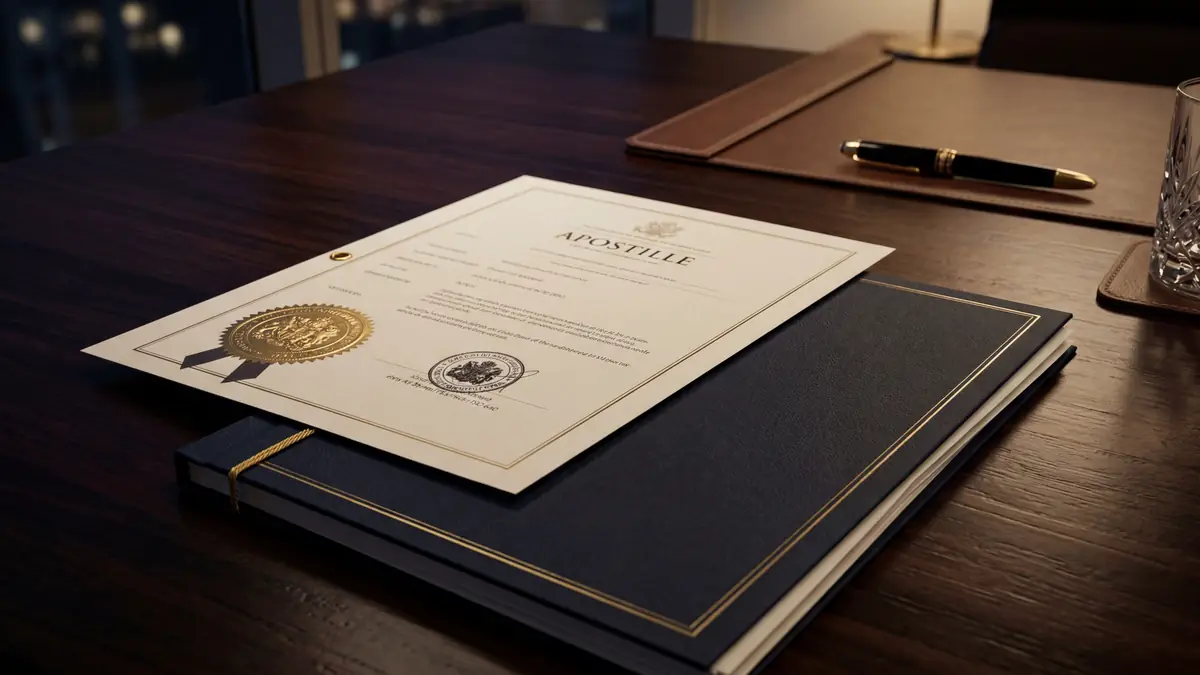
Certificate and apostille seal on a desk
Illustrative image; does not represent an official document.

When a family member passes away and there's property, a bank account, or an estate matter pending in another country, it's common to find that the foreign authority doesn't ask for just one document, but several: a death certificate, a probate order, and sometimes a power of attorney. This guide explains what documents are commonly required, which U.S. authority each one comes from, and why they don't all follow the same path to apostille.

Quick summary

An inheritance case abroad may require: 1) the death certificate, issued by the state's vital statistics office; 2) a probate order or letters of administration, issued by the county court; 3) a power of attorney, if someone else will act on the estate's behalf; 4) in some cases, bank or property records. Each document generally needs its own apostille, and none of these procedures replaces an attorney's advice on your inheritance rights.

The death certificate: almost always the first document

The death certificate is, in most cases, the first document the foreign authority asks for, since it proves the death to the receiving registry, bank or notary. To be eligible for apostille, it must be the version issued by the Bureau of Vital Statistics of the state where the death occurred and signed by the State Registrar, not a printout from a local health department. In Florida, records less than 50 years old that include the cause of death are also confidential and can only be requested by eligible parties, such as the next of kin or the administrator of the estate. See the full detail in our Florida death certificate apostille guide.

Probate order or letters of administration: a different, judicial document

Unlike the death certificate, which comes from the vital statistics office, a probate order or letters of administration is a court document. In Florida, it's obtained as a certified copy from the Clerk of the Circuit Court in the county where the probate case was filed, an entirely different authority from vital statistics, similar to how a Florida divorce judgment also comes from the county clerk rather than the Bureau of Vital Statistics. Many receiving registries and notaries abroad require this document apostilled, especially to transfer property or access bank accounts held in the estate's name.

Power of attorney: when someone else will act on your behalf

If you can't travel or prefer that someone else handle the matter in the country where the inheritance is, you'll generally need a power of attorney authorizing them to act on your behalf. A power of attorney is a private document: it must be signed before a notary before it can be apostilled, and it's apostilled in the state where that notarization took place, which may or may not be the same state tied to the estate. See the details on our power of attorney apostille service.

We can help you confirm which documents in your specific case need an apostille and coordinate the process end to end, on the U.S. side.

Bank or property records, when the case requires them

Some cases also involve a U.S. bank reference letter, an account statement, or a property deed that the estate must transfer or settle. Whether these documents need an apostille depends on the specific document and what the receiving authority in the destination country requires; not every financial or property document follows the same process as a state or court document.

Why each document may need its own apostille

A common mistake is assuming that, if several documents are sent together for the same inheritance case, a single apostille covers all of them. In practice, each document usually has a different issuing authority, the state vital statistics office for the death certificate, the county court for the probate order, the state of notarization for the power of attorney, so each generally requires its own apostille request, even when they all relate to the same estate.

Common mistakes

  • Assuming a single apostille process covers every document in the case.
  • Sending a local printout of the death certificate instead of the Bureau of Vital Statistics version.
  • Confusing the will with the probate order issued by the court.
  • Signing a power of attorney without first confirming the format the destination country requires.
  • Asking the party coordinating document authentication for advice on inheritance rights, instead of an attorney.
FAQ

Frequently asked questions

Still have questions? Write to us with your specific case and we'll review it with you.

What U.S. documents are commonly requested for an inheritance abroad?+
It depends on the case, but it's common to need a death certificate, a probate order or letters of administration, and a power of attorney if someone else will act on the estate's behalf abroad. Some cases also require bank or property records.
Is the death certificate always necessary?+
In almost every inheritance case, yes, since it's the document that proves the death to the receiving authority abroad. It must be the version issued by the state's Bureau of Vital Statistics, not a local printout.
What's a probate order, and how is it different from a will?+
A will is the private document in which a person expresses their wishes; a probate order or letters of administration is the court document issued by the Clerk of the Circuit Court recognizing the will or appointing an administrator of the estate.
Do I need a power of attorney if I can't travel to the country where the inheritance is?+
Often, yes, to authorize someone else to act on your behalf before the registry, bank or notary abroad. The power of attorney must be notarized before it can be apostilled.
Can a single apostille cover all of these documents?+
Generally no. Each qualifying document needs its own apostille, since each may come from a different issuing authority, even when they're being sent together for the same case.
Can you tell me if I'm entitled to the inheritance?+
No. That's a legal question that depends on the applicable succession law and should be answered by an attorney, in the U.S. or in the destination country. We coordinate the authentication of the documents; we don't determine inheritance rights.
Contact

Need to coordinate the apostille of inheritance documents?

Send us which documents you already have and the destination country. We'll review what applies to your case before starting any procedure.

Request your document review

Add more details (optional)+
Call

Please do not include Social Security numbers, financial account information or other highly sensitive personal data.

WhatsAppCallEmail