
Apostille of U.S. documents for an inheritance abroad
An inheritance matter abroad can require several different U.S. documents together: a death certificate, a probate order or letters of administration, a power of attorney, and sometimes bank or property records. We help you identify which documents apply to your case and coordinate the apostille for each one, on the U.S. side.
Document authentication, not legal advice · Documents from all 50 states · Sensitive matters handled with care
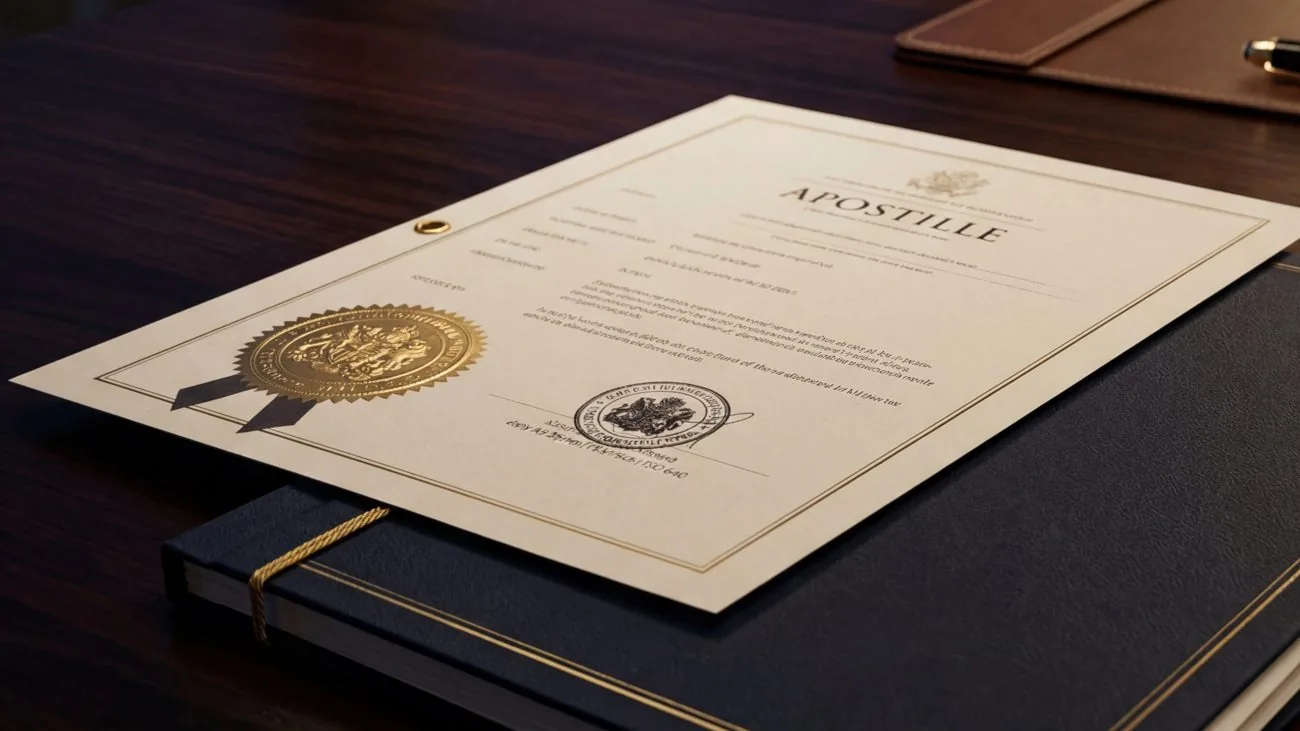
We coordinate document authentication, not inheritance law
When a family member passes away and there's property, a bank account, or an estate matter to settle in another country, the receiving registry, notary or attorney abroad will usually ask for one or more U.S. documents to be authenticated before they can be used there. Depending on the case, that can include a death certificate, a probate order or letters of administration issued by the court, a power of attorney authorizing someone to act on the estate's behalf, and sometimes bank statements or property records.
Our role is to help you identify which of these documents your case actually needs, confirm the correct U.S. authority for each one, and coordinate the apostille or, where applicable, consular legalization. We are not a law firm and do not provide legal or tax advice about who is entitled to an inheritance, how a will should be interpreted, or how a specific country's succession law applies to your case; those are questions for your own attorney, in the U.S. or in the destination country.
Documents an inheritance case abroad may require
Not every case needs all of these. Send us your situation and we'll help you confirm which documents actually apply.
Death certificate
Issued by the Florida Bureau of Vital Statistics (or the equivalent office in the relevant state), signed by the State Registrar. A local county printout is not eligible for apostille. See our dedicated Florida death certificate guide.
Probate order / letters of administration
A certified copy issued by the Clerk of the Circuit Court in the county where the probate case was filed, a different authority from vital statistics, similar to how a Florida divorce judgment also comes from the county clerk.
Power of attorney
Often used to authorize someone to act on the estate's behalf abroad. It must be notarized before it can be apostilled, and is apostilled in the state where it was notarized. See our power of attorney apostille service.
Bank or property records
Some cases also require a bank reference letter, account statement, or property deed. Whether these need an apostille depends on the document and the receiving country's requirements.
These documents don't all follow the same route
State-level documents
A death certificate comes from the state's vital statistics office, and its apostille is issued by that same state's apostille authority.
County-court documents
A probate order or letters of administration are certified by the Clerk of the Circuit Court in the county where the case was filed, a different issuing authority than vital statistics, though still authenticated by the state's apostille authority.
Notarized documents
A power of attorney is a private document that must first be notarized; it's then apostilled in the state where that notarization took place, which may or may not be the same state tied to the estate.
Because each document may have a different issuing authority, each one generally needs its own apostille request, even when they're being sent together for the same case.
Three steps to coordinate your case
Send us the details
Tell us which documents you already have, the destination country, and what the receiving registry, notary or attorney has asked for. Free initial review.
We map out which documents and authorities apply
We confirm which documents need to be requested or gathered, the correct issuing authority for each, and whether apostille or consular legalization applies to your destination.
We coordinate each apostille and return the set
We coordinate the apostille for each qualifying document before the corresponding state or federal authority, and return the full set to you or your designated recipient.
Questions about apostilling inheritance documents
Send us your case and the destination country, and we'll help you confirm which documents apply.
What U.S. documents might I need for an inheritance abroad?+
Can you tell me if I'm entitled to an inheritance?+
Do I need a probate order apostilled?+
Can one apostille cover my whole inheritance case?+
Does the death certificate need to be a specific version?+
Does the destination country matter for what's required?+
Articles that may help
Related services
Let's coordinate your inheritance documents
Send us which documents you already have and the destination country. The initial review is free.