
Serving the U.S. and clients worldwide since 2004
Inheritance and probate

How to Apostille a Florida Death Certificate for an Inheritance Abroad
Practical guide · 7 min read · August 10, 2026

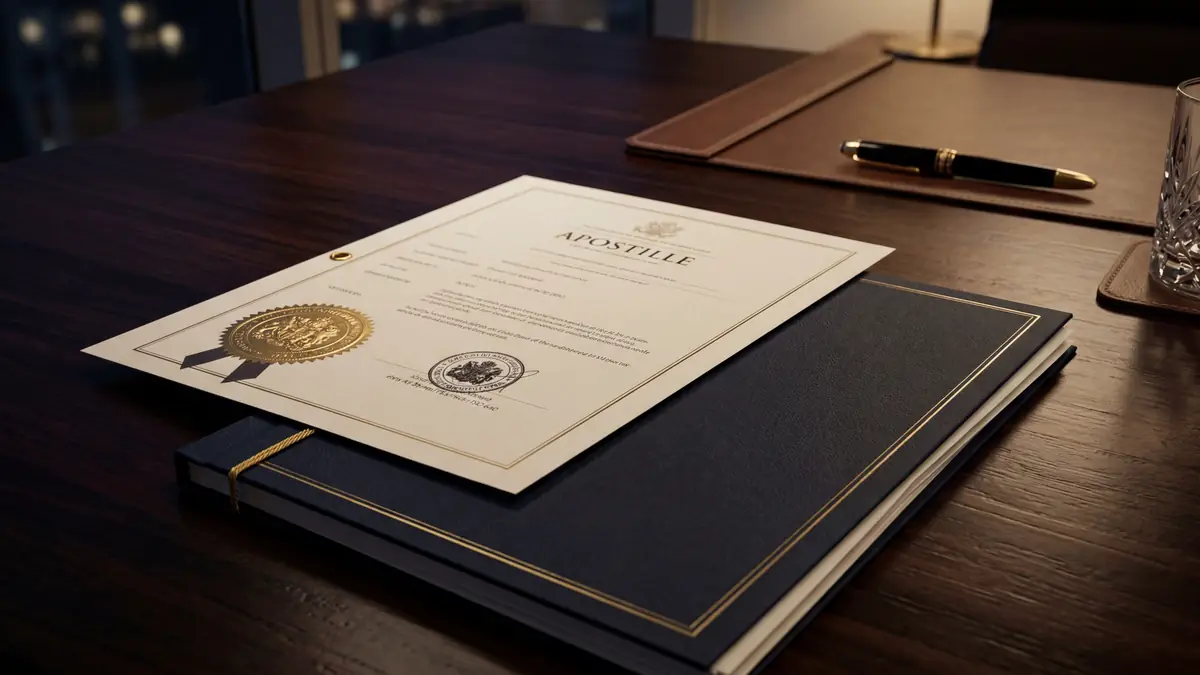
Certificate and apostille seal on a desk
Illustrative image; does not represent an official document.

The death certificate is usually the first document a registry, bank, or notary abroad asks for when handling an inheritance, but not every version of the certificate is eligible for apostille. This guide goes deep on that specific step: which version of the Florida death certificate is eligible for apostille, who can request it in an inheritance case, and how the apostille process works once you obtain the certified copy.

Quick summary

To apostille a Florida death certificate for an inheritance case: 1) it must be the certified copy issued by the Florida Bureau of Vital Statistics, signed by the State Registrar, not a printout from a county health department; 2) if the record is less than 50 years old and includes the cause of death, only an eligible party can request it, such as the next of kin or the executor of the estate; 3) it must be an original, not a photocopy; 4) it's apostilled before the Florida Department of State (Division of Corporations) after it's obtained. Other documents in your case, like a probate order or a power of attorney, may need separate apostilles.

The correct version: the Bureau of Vital Statistics certificate

Not every copy of a Florida death certificate is eligible for apostille. For apostille purposes, it must specifically be the certified copy issued by the Florida Bureau of Vital Statistics, the vital records office within the Florida Department of Health, and it must carry the State Registrar's signature. A printout or certification issued by a local county health department, even if it contains the same information, is not eligible for apostille, because the apostille authority verifies the State Registrar's signature, not a local office's.

Who can request it, and why this matters in an inheritance case

Death records less than 50 years old that include the cause of death are confidential in Florida and can only be requested by eligible parties: the next of kin, the spouse, a parent or child of the deceased, the executor or administrator of the estate, or someone who can show an interest in the estate, for example through a will or an insurance policy. A version of the certificate without the cause of death is generally available to anyone 18 or older.

This eligibility rule has a direct consequence in an inheritance case: to obtain the certified copy that will later be apostilled, the requester normally must be able to show they're one of these eligible parties, for example, by presenting themselves as the executor or administrator of the estate, or as the next of kin. In other words, eligibility to request the certificate and the person's role in the inheritance case are usually directly connected.

An original certified copy, not a photocopy

Apostilling the death certificate requires an original certified copy, not a photocopy. A scanned or photocopied version of the certificate, even if it comes from a valid original, is not accepted for the apostille process.

We can help you confirm whether the death certificate you have is the correct version before starting the apostille process.

A two-step process: first the record, then the apostille

Apostilling a Florida death certificate is a two-step process. First, you request the certified copy from the Bureau of Vital Statistics. Then, that certified copy is submitted for apostille before the Florida Department of State (Division of Corporations), the sole apostille authority for Florida documents. The Department of State doesn't re-verify the facts on the certificate; it authenticates the document by confirming that the State Registrar's signature is on file with that office. See the full process in our Florida death certificate apostille service.

Other documents your inheritance case might also need

The death certificate is usually just one of the documents an inheritance case abroad requires. Depending on what the receiving registry or bank asks for, you may also need a probate order or letters of administration issued by the court, or a power of attorney if someone else will act on your behalf. Each of these documents comes from a different authority than the Bureau of Vital Statistics and generally follows its own apostille process. We cover that full picture in our guide on what U.S. documents may need apostilles for an inheritance abroad, and in our power of attorney apostille service if you need to authorize someone else to act on your behalf.

Common mistakes

  • Sending a county health department printout instead of the Bureau of Vital Statistics version.
  • Sending a photocopy instead of the original certified copy.
  • Requesting the certificate without being able to show you're an eligible party, such as executor, administrator, or next of kin.
  • Assuming that apostilling the death certificate covers the entire inheritance case, without considering the probate order or power of attorney.
  • Asking the party coordinating the apostille for advice on inheritance rights, instead of an attorney.
FAQ

Frequently asked questions

Still have questions? Write to us with your specific case and we'll review it with you.

Which version of a Florida death certificate is eligible for apostille?+
It must be the certified copy issued by the Florida Bureau of Vital Statistics (part of the Florida Department of Health) and signed by the State Registrar. A printout issued by a county health department is not eligible for apostille.
Who can request the death certificate for an inheritance case?+
If the record is less than 50 years old and includes the cause of death, only an eligible party can request it: the next of kin, the spouse, a parent or child, the executor or administrator of the estate, or someone who can show an interest in the estate, for example with a will or an insurance policy. A version without the cause of death is generally available to anyone 18 or older.
Does a photocopy of the death certificate work for the apostille?+
No. You need an original certified copy; a photocopy is not eligible for apostille.
Who apostilles the death certificate once it's obtained?+
The Florida Department of State (Division of Corporations) is the sole apostille authority for Florida documents. It authenticates the document by confirming that the State Registrar's signature is on file with that office; you first request the certified copy from Vital Statistics, then apostille it before the Department of State.
Why does it matter that the certificate I request identifies me as an eligible party?+
Because in an inheritance case, Florida's own registry usually requires that whoever requests the certificate be the executor or administrator of the estate, the next of kin, or another eligible party; that's what allows you to obtain the certified copy needed for the apostille.
Is apostilling the death certificate enough for the whole inheritance case?+
Not necessarily. Many inheritance cases also require other documents, such as a probate order or a power of attorney, which come from different authorities. It also doesn't determine who is entitled to the inheritance; that's a legal question for your attorney.

Informational content. Integramerica is not a law firm and does not provide legal or tax advice. We do not determine inheritance rights or the validity of a will, or how a specific country's succession law applies; those questions belong with your own attorney, in the U.S. or in the destination country. Requirements and final acceptance depend on the receiving authority. Reviewed August 2026.

Contact

Need to apostille a death certificate for an inheritance?

Tell us whether you already have the certified copy from the Bureau of Vital Statistics and the destination country. We'll review what applies to your case before starting any procedure.

Request your document review

Add more details (optional)+
Call

Please do not include Social Security numbers, financial account information or other highly sensitive personal data.

WhatsAppCallEmail