
Serving the U.S. and clients worldwide since 2004
Powers of attorney

How to Apostille a Power of Attorney to Sell Property Abroad
Practical guide · 7 min read · Published August 10, 2026

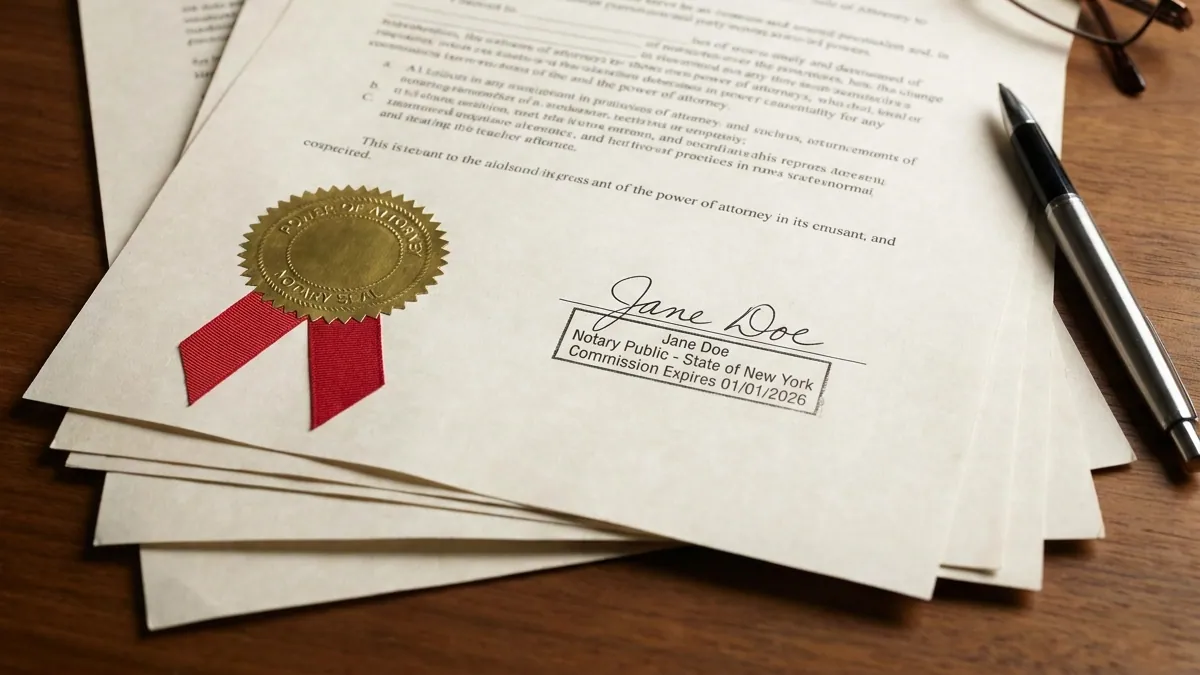
Signed power of attorney next to an apostille seal
Illustrative image; it does not represent an official document.

When you cannot travel to personally sign the sale of property abroad, a power of attorney lets you authorize someone else to sign on your behalf before the notary office or property registry in the country where the property is located. For that document to have effect outside the United States, it generally has to be signed before a notary public and then apostilled in the same state where the notarization took place. The exact wording the power of attorney needs — which authority to grant, how to describe the property, what identification of the agent to require — is set by the destination notary, attorney, or property registry, not by Integramerica.

Quick summary

1) ask the destination notary or attorney for the exact wording the power of attorney needs (express authority to sell, property description, agent's identification); 2) sign the power of attorney before a notary public, in person or by Remote Online Notarization (RON) if the state and the destination both allow it; 3) the document is apostilled in the same state where it was notarized, not where you live; 4) confirm with the recipient whether consular legalization applies instead of an apostille; 5) coordinate the certified translation separately, confirming whether it comes before or after the apostille. Do not sign until the recipient has approved the wording.

Why a special power of attorney is almost always required, not a general one

Selling property is a specific act, and most foreign notary offices, property registries, and buyers ask for a special (or limited) power of attorney that expressly authorizes the sale of that particular property, identified by its address or registry/parcel number, instead of a broad general power of attorney. A general power of attorney can be rejected at closing if the property registry requires the authority to sell that specific property to be stated expressly. As explained in our guide on the apostille of powers of attorney, every country and every notary office can require different wording, so it is worth confirming the exact text before signing.

Who should draft or approve the wording

The substantive content of the power of attorney — which authority to grant, how to describe the property, what identification of the agent to include — should come from the attorney, notary office, or property registry in the country where the property is located. Integramerica reviews the notarization, apostille, and translation route, but does not draft the legal wording of the power of attorney or determine what authority the seller should grant; that depends on the law of the country where the property sits and on the specific requirements of the buyer, bank, or registry involved in the transaction.

Notarization: in person or remote, and the state that matters

The power of attorney must be signed before a notary public, either in person or, in states that offer it, through Remote Online Notarization (RON). What determines where the document is apostilled is not where you live, but the state where the notary who signed it is commissioned. If you sign in Florida, the document is apostilled in Florida; if you sign before a notary in another state, it has to be apostilled in that other state. Before choosing RON over in-person notarization, confirm with the destination property registry or notary office whether they accept a remotely notarized document; that acceptance depends on the receiving country, not on Florida. You can read more about this decision in our guides on signing a foreign power of attorney before a Florida notary and on Remote Online Notarization (RON) for powers of attorney used abroad.

The steps to apostille a power of attorney to sell property

  1. Get the exact wording and required authority from the recipient (notary office, attorney, or property registry).
  2. Confirm the state where you will sign and whether that state offers RON, if you prefer that option.
  3. Sign the power of attorney before the appropriate notary, in person or by RON.
  4. Process the apostille through that same state's authority (in Florida, through the Division of Corporations, as part of the Florida Department of State's apostille process).
  5. Coordinate the certified translation into the destination country's language, confirming with the recipient whether it should happen before or after the apostille.
  6. Send the apostilled (and, if applicable, translated) document, keeping the apostille physically attached to the power of attorney without altering the set.

Translation and sending the document

If the destination country does not work in English, the receiving notary office or registry will almost always require a certified translation of the power of attorney and, in some cases, of the apostille itself. Integramerica coordinates this translation separately from the apostille process; confirm with the recipient whether they prefer the document apostilled and then translated, or a different order. Keep the apostille attached to the original document exactly as the issuing authority delivered it: separating the pages or re-stapling the set can lead the foreign notary office or registry to question the document's integrity.

Common mistakes with property-sale powers of attorney

  • Signing before the destination notary office or registry has approved the wording.
  • Using a general power of attorney when the registry requires express authority to sell an identified property.
  • Apostilling in the state where the signer lives instead of the state where it was notarized.
  • Choosing RON without first confirming the destination accepts it.
  • Sending a photocopy instead of the original document with the physical apostille.
  • Translating before confirming the correct order and which translator the recipient accepts.
FAQ

Frequently asked questions

Have more questions? Send us your specific case and we'll walk through it with you.

Do I need a general or a special power of attorney to sell property abroad?+
Generally a special power of attorney that expressly authorizes the sale of that identified property. Confirm the exact scope the destination property registry or notary office requires before drafting the wording.
In which state does the property-sale power of attorney get apostilled?+
In the state where it was signed before a notary, not where you live. If you sign in Florida, the apostille is processed in Florida, even if you reside in another state or country.
Can I sign the power of attorney through Remote Online Notarization (RON)?+
In states that offer RON, it is possible from Florida's standpoint, but whether the destination property registry or notary office accepts a remotely notarized document depends on that destination's own rules, not on Florida. Confirm this before choosing that option.
Who drafts the wording of the power of attorney?+
The attorney, notary office, or property registry in the country where the property is located. Integramerica coordinates the notarization, apostille, and translation, but does not determine the legal authority the power of attorney should grant.
Does the translation happen before or after the apostille?+
It depends on the recipient. Many notary offices and registries ask for the original document to be apostilled first and the full set translated afterward, but confirm the exact order with the receiving entity before starting.
What happens if the property registry rejects the already-apostilled power of attorney?+
The apostille certifies the origin of the notary's signature, not that the wording of the power of attorney complies with the destination country's law. If the registry rejects it over the content, the wording generally has to be corrected with the local attorney and the signing and apostille repeated.
Contact

Need to apostille a power of attorney to sell property?

Send us the draft or the already-signed power of attorney, the state where it was or will be notarized, and the country where the property is located. We'll review the route before you incur unnecessary expense.

Request your power of attorney review

The notary's state, not necessarily where you live.
Add more details (optional)+
Call us

Please do not include Social Security numbers, financial account information or other highly sensitive personal data.

WhatsAppCallEmail