
Serving the U.S. and clients worldwide since 2004
Name mismatch

Name Mismatch on Birth, Marriage, or Apostilled Documents: What Should You Do First?
Practical guide · 8 min read · Published August 10, 2026

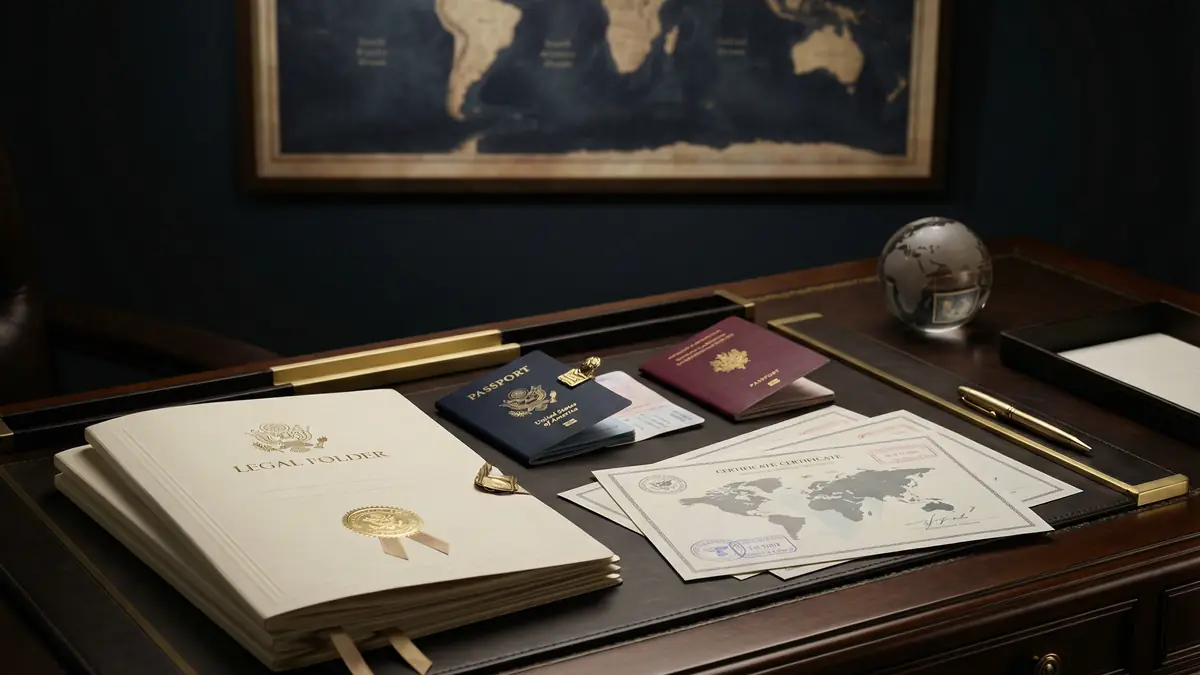
A legal folder with passports and personal documents, illustrating names that must match across records
Illustrative image; it does not represent an official document.

A name that does not match exactly across a passport, a birth or marriage certificate, and an apostilled document is one of the most frequent rejection causes, and one of the least related to the apostille itself. We already flagged it as one of the ten problems in our checklist on why was my apostille rejected?; here we explain in more detail why it happens and the two general paths to fix it before you re-apostille anything.

The two general paths

If a name does not match across your documents, you generally need one of two things: (1) an additional document that bridges the two names, such as a marriage certificate connecting a maiden name to a married name, or (2) a corrected or reissued underlying document, when the mismatch comes from an error on the original record. Simply re-apostilling the same document does not solve either case.

Why exact name matching matters so much

A receiving authority reviewing a file — a consulate, a university, a foreign civil registry — needs to be able to confirm that the passport, the apostilled document, and the application all belong to the same person. In practice, the name is the main point of comparison across those documents. When the name does not match exactly, the receiving authority cannot assume it is the same person without additional evidence confirming it, even when the connection seems obvious to the applicant. This mismatch can appear alone or alongside other issues in the file, so it's worth reviewing the rest of the document just as carefully.

Common causes of mismatch

  • Maiden name vs. married name. The birth certificate shows one surname, and the passport or a later document shows the surname adopted after marriage.
  • Transliteration differences. When a name moves from one alphabet or language to another, legitimate spelling variations can appear between one document and another.
  • Different surname order or convention. Some countries use given-name and surname conventions different from those in the U.S., which can create apparent inconsistencies between documents that actually refer to the same person.
  • A typo on the original document. Sometimes the mismatch does not come from a legitimate name change but from an error made by the office that issued the document.

The two paths to resolving it

If the mismatch reflects a legitimate name change, such as a marriage, what is generally needed is an additional document that bridges both names, for example a marriage certificate or a name-change document, also apostilled if the receiving authority requires it. If, instead, the mismatch comes from an error on the original document — a name misspelled by the office that issued it — the correct path is usually to request a corrected or reissued copy from that same registry office, not simply to re-apostille the version with the error. In both cases, the apostille you already have remains valid as a signature authentication; the problem is in the underlying document's content, not the apostille. Which specific document each receiving authority accepts as proof connecting the names varies by country and procedure, so confirm directly with them before gathering documentation.

Before you resubmit the file

Gather every document that shows the name's history — birth certificate, marriage certificate, prior name changes, current passport — and compare them against each other before deciding what to reissue. If the rejection notice did not state precisely what the inconsistency was, ask for clarification in writing; that is the same first step we recommend in our full guide on what to do if a consulate rejects your apostilled document. If the document with the inconsistent name also has an age problem, also see my apostilled document is too old: do I need a new apostille or a new document?, since both issues can occur in the same file.

FAQ

Frequently asked questions

Have more questions? Send us your specific case and we'll walk through it with you.

Why does a receiving authority reject a document over a name mismatch?+
Because the receiving authority needs to confirm that all the submitted documents belong to the same person. If the name on the passport, the apostilled document, and the application do not match exactly, it cannot establish that connection without additional evidence.
Does re-apostilling the same document fix a name mismatch?+
No. The apostille certifies the signature or seal of the official who issued the document; it does not change or correct the name that appears in the content. If the name on the underlying document is the problem, a new apostille on the same document changes nothing.
What is a document that "bridges" the names?+
It is an additional document that proves two different names belong to the same person, for example a marriage certificate connecting a maiden name to a married name. Which specific document each receiving authority accepts as proof of that connection varies, and should be confirmed directly with them.
When do I need a corrected document instead of a bridging document?+
When the mismatch comes from an actual error on the original document, for example a name misspelled by the office that issued it, rather than a legitimate difference between two names belonging to the same person. In that case, the corresponding registry office can normally issue a corrected copy.
Do transliteration differences also count as a name mismatch?+
Yes. When a name is transcribed from one alphabet or language to another, legitimate spelling variations can appear between documents. Many receiving authorities have their own criteria for accepting or rejecting those variations, so it is worth confirming directly with them.
Contact

Was your document rejected over a name mismatch?

Send us the documents that show the name in each version (birth, marriage, passport) and the rejection notice. We'll review with you whether you need a bridging document or a correction, before you pay to repeat the process.

Request a review of your name mismatch case

Examples: Florida, New York, FBI, U.S. Department of State.
Add more details (optional)+
Call us

Please do not include Social Security numbers, financial account information or other highly sensitive personal data.

WhatsAppCallEmail