
Serving the U.S. and clients worldwide since 2004
Age and validity

My Apostilled Document Is Too Old: Do I Need a New Apostille or a New Document?
Practical guide · 7 min read · Published August 10, 2026

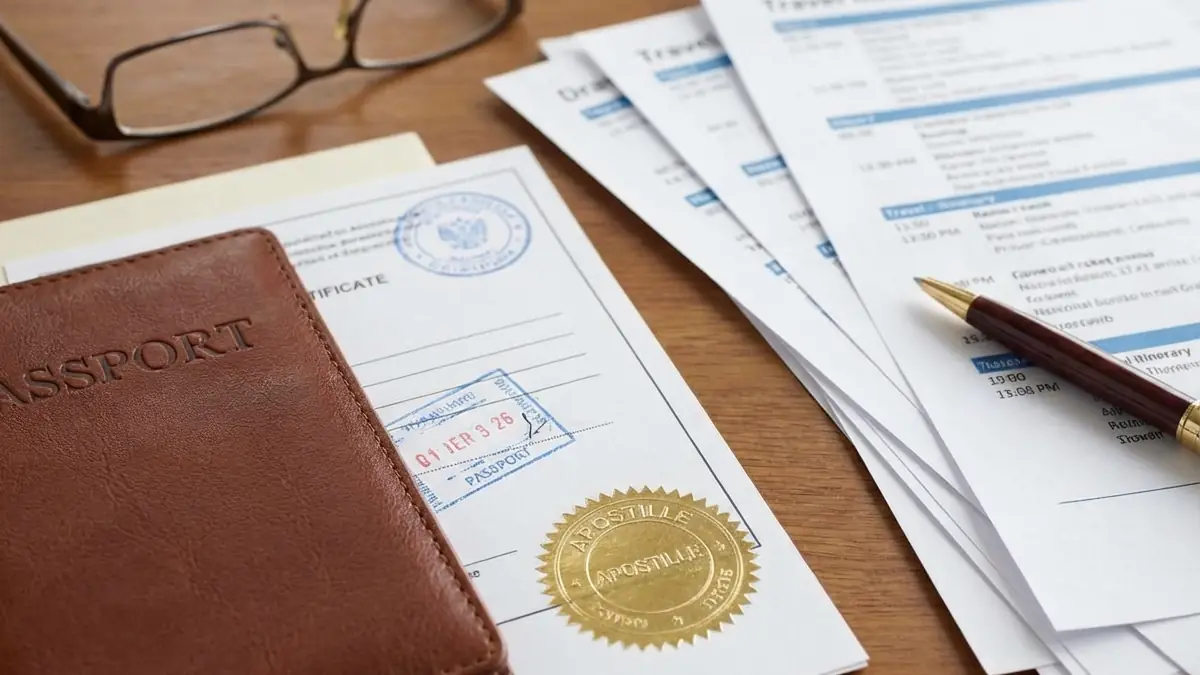
A passport next to an apostilled document and travel tickets, illustrating an international procedure
Illustrative image; it does not represent an official document.

If an apostilled document was sent back to you because it is "expired" or "too old," it's worth pausing before ordering another apostille. The apostille issued by the state of Florida does not carry a printed expiration date; what can carry a limit is the underlying document, based on the receiving authority's own criteria in the destination country. Confusing these two things — the apostille's validity and the document's age — is one of the ten causes we cover in our checklist on why was my apostille rejected? 10 problems to check, and here we explain it in more detail.

The key distinction

The apostille does not expire. What can expire, depending on the receiving authority, is the underlying document: some procedures require the certified copy to have been issued within a recent window counted from its issue date, not from the apostille's date. If your underlying document does not meet that window, you need a new document, not just a new apostille.

The apostille itself has no expiration date

An apostille certifies that the signature, seal, or title of the official who issued or certified a document is authentic. It is an authentication of origin, not a rating of the content or of how current the information is. That is why the Florida Department of State does not print an expiration date on the apostille: once issued, it keeps authenticating that signature or seal indefinitely. If you were told "the apostille expired," it is worth asking for that to be clarified in writing, because the real problem is more likely to sit somewhere else in the file.

When an age limit exists, the receiving authority sets it on the underlying document

Many receiving authorities — a consulate, a ministry, an employer, an educational institution — set their own age requirement for certain documents, for example background checks, single-status certificates, or civil records used for a specific procedure. That requirement is normally measured from the document's issue date, not from the date the apostille was attached. A document can carry a recent apostille and still fail to meet the age requirement if the underlying document itself was issued too long ago according to that authority's own criteria. This requirement varies enormously by document type, country, and specific procedure; there is no single window that applies to every case.

A new apostille on the same document, or an entirely new document?

If the problem is that the underlying document exceeds the age limit the receiving authority requires, the fix is not to order another apostille on that same document: it is to obtain a new underlying document. Apostilling the same document a second time does not change its issue date; the apostille certifies the signature and seal that already existed, it does not reissue the content or update its date. The document would still carry its original issue date, and would therefore still fail the age requirement, even with a brand-new apostille on top of it. In that scenario, the correct step is to request a new certified copy from the registry office that originally issued the document and, once you have it, apostille that new copy.

How to confirm the age requirement for your case

There is no fixed number of months or years that applies generally; each receiving authority sets its own criteria, and that criteria can change by document type and procedure. Before requesting a new document or an additional apostille, confirm directly with the receiving authority — not with a generic guide written for a different country or document type — whether an age limit exists, how it is measured (from the issue date, the registration date, or another event), and exactly what evidence must accompany the document. If the rejection notice did not state the reason precisely, ask for clarification in writing before spending time and money redoing something that may not have been the real problem; that is also the first step we recommend in our full guide on what to do if a consulate rejects your apostilled document.

FAQ

Frequently asked questions

Have more questions? Send us your specific case and we'll walk through it with you.

Does a Florida apostille expire after a certain amount of time?+
No. Florida does not put an expiration date on the apostille itself; once issued, it keeps authenticating the signature or seal of the official who generated it. What can carry an age limit is the underlying document, based on the receiving authority's own criteria.
Why would a receiving authority require a recent document if the apostille never expires?+
Because the apostille certifies the authenticity of a signature or seal, not the currency of the document's content. Many receiving authorities require certain documents, such as background checks or civil certificates, to have been issued within a recent window counted from their issue date, to make sure the information is still current.
Does re-apostilling the same old document fix the rejection?+
No, if the problem is the age of the underlying document. Apostilling the same document again does not change its issue date; the apostille only certifies the signature or seal, it does not reissue the document. In that case you need a new underlying document, for example a recently issued certified copy, and then that new copy needs to be apostilled.
How much age does each country or procedure accept?+
It varies by country, receiving authority and document type, and there is no general rule. Confirm the specific requirement directly with the receiving authority before requesting a new document or a new apostille.
How do I get a new underlying document if the original is now too old for the destination?+
You need to request an updated certified copy from the registry office that originally issued the document, for example vital records or the corresponding state agency, and then apostille that new copy. We can guide you through that process based on your document type.
Contact

Does your apostilled document no longer meet an age requirement?

Tell us what the receiving authority said about the document's age, and we'll review with you whether you need a new certified copy or just a new apostille, before you pay to repeat the process.

Request a review of your document's validity

Examples: Florida, New York, FBI, U.S. Department of State.
Add more details (optional)+
Call us

Please do not include Social Security numbers, financial account information or other highly sensitive personal data.

WhatsAppCallEmail