Serving the U.S. and clients worldwide since 2004
Digital nomad visa

Digital nomad visa: what documents you need and when they need an apostille

Practical guide · 8 min read · Published July 31, 2026

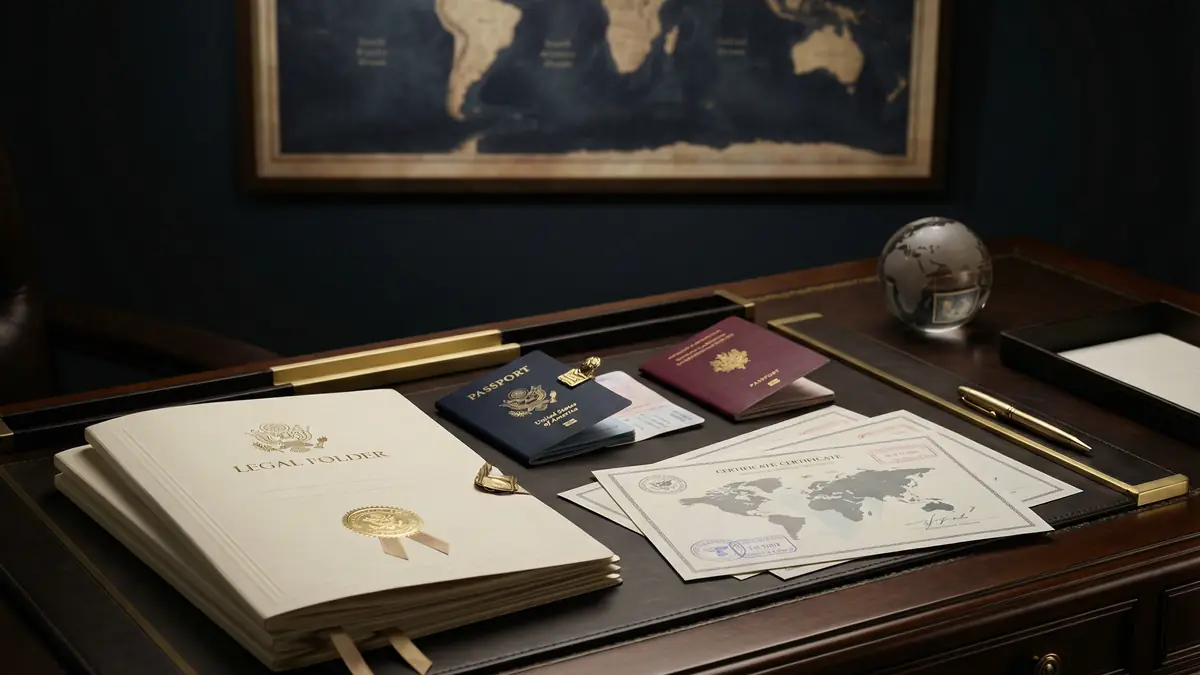
Legal folder, passports and certificates prepared for a visa application
Illustrative image; it does not represent an official document.

Every country runs its own digital nomad visa program, with its own authority, form, and checklist. But line up several programs side by side and the same handful of documents keeps showing up. This guide covers that common ground — what each document is and when it needs an apostille — and connects it to our country-specific guides for Colombia, Spain, and Portugal.

The documents almost every program asks for

Regardless of the country, most digital nomad programs ask for some combination of: a valid passport, proof that your work and income come from outside the country (an employer or client letter, a contract, bank statements), health insurance with coverage in the destination country, and, in many cases, a criminal background check. Some programs add proof of accommodation, a university degree, or an application fee. The exact combination and order vary, so treat this list as a starting point for organizing your file, not as any one country's final checklist.

Criminal background checks: the most predictable apostille route

Of all the typical digital nomad visa documents, a criminal background check is usually the easiest to place in terms of apostille: if the program asks for an FBI background check, the apostille is issued by the U.S. Department of State, no matter which state you live in, because it's a federal document. If the program instead accepts a state or local background check, the apostille follows the state that issued it. The most common mix-up is apostilling the wrong one — for example, a state-level report when the program specifically requires the FBI's — so confirm which one the country actually asks for before you order it.
Income and employment letters: the apostille depends on the country, not a general rule

Employment letters, contracts, and bank statements are almost always considered private documents rather than public documents issued by a government entity. That's why many countries don't require an apostille for them — but "many" isn't "all," and some programs do ask that they be notarized, or even that the notarization itself be apostilled. Don't assume a document in English is automatically accepted without translation, either: some programs have an explicit language exception, others have none at all. Check the specific country's rule; don't infer it from another country just because the program has a similar name.

Health insurance and dependents' documents

If you're traveling with a spouse, partner, or children as dependents, it's common for the program to ask for birth or marriage certificates proving the relationship. These are almost always public documents, so they typically do need an apostille from the issuing state, plus translation if the destination country doesn't accept English. Gathering civil records from different states can take longer than the rest of the file combined, so identify which certificate each dependent needs early in the process, not at the end.

Diplomas and professional certifications, when the program asks for them

Not every digital nomad program requires a university degree, but some use it as an eligibility criterion or as additional support for the applicant's professional profile. When it's required, it generally follows the same logic as any academic document: it's apostilled in the state where the university registrar notarized the certification, not the state where you currently live. A plain copy of the diploma is almost never enough; check whether the program wants the original diploma, a certified copy, or the transcript.

Translation: when it's required and when it isn't

Translation is one of the most commonly misunderstood steps. Some countries accept clearly written documents in English without translation; others require translation of absolutely everything, including the apostille's own seal. The costliest mistake is translating before confirming the required order when the country wants it the other way around, because then the apostilled document has to be translated all over again. Confirm the exact order — apostille first and translation after, or the reverse — before paying for either service.

Why a generic guide can't replace the country's checklist

Everything above describes common patterns, not guaranteed requirements. Each country's immigration authority publishes its own current list, which can change from one year to the next, and that list always has the final say over what your specific application needs. Use this guide to understand what kind of document you're dealing with and what question to ask about it — not as a substitute for confirming the official checklist the same day you prepare your file.

What we cover in depth: Colombia, Spain, and Portugal

We've already written detailed guides for the three digital nomad programs we get asked about most. Each one goes into the real detail for that country: income thresholds, dependents' documents, language exceptions, and that specific application's common mistakes.

Recommended order for putting your file together

  1. Choose the country and download the current official checklist directly from the source, not from a blog.
  2. Identify which documents are public (almost always need an apostille) and which are private (sometimes don't).
  3. Order the documents that take longest first: civil records from other states, background checks, diplomas.
  4. Confirm the required order between apostille and translation before paying for either.
  5. Gather employment letters, contracts, and bank statements close to your filing date, so they reflect recent information.
  6. Do a final check against the official checklist before submitting the complete file.

Common mistakes

Apostilling documents by reflex that the country treats as private, without first checking whether an exception applies. Translating before confirming the required order between apostille and translation. Assuming one country's checklist applies to another just because both programs are called a "digital nomad visa." And leaving documents that depend on third parties — civil records from another state, background checks — for last, when those are exactly the ones that take the longest.

Frequently asked questions

Do all digital nomad programs ask for a criminal background check?+
Not all of them, but it's one of the most commonly requested documents. Confirm whether the country specifically requires a federal (FBI) check, a state-level one, or both, before you order it.
Do I need to apostille my diploma for a digital nomad visa?+
Only if the specific program requires it as part of the file. Many digital nomad programs don't ask for a university degree; others use it as an eligibility criterion.
Do bank statements always need an apostille?+
Generally no. Most countries treat them as private documents, and some accept a letter or statement in English without translation or apostille, but the exact rule varies by country and should be confirmed before you process anything.
Can I use the same apostille to apply to more than one country?+
No. Each apostille certifies a specific document for a specific use. If you're applying to more than one country, you generally need a separate set of documents and apostilles for each application.
How far in advance should I start gathering documents?+
The earlier the better. Between obtaining the original document, the apostille, and, if needed, a certified translation, the combined process usually takes longer than most applicants expect.
What if the country I'm interested in isn't Colombia, Spain, or Portugal?+
The same general framework in this guide still applies: identify what the specific program requires, confirm which documents are public versus private, and check the current official checklist before apostilling or translating anything.
Contact

Need to prepare these documents?

Send us the destination country and a legible copy. We can help you identify the right documentary route, apostille, or translation.

Request your document review

Examples: Florida, New York, FBI, U.S. Department of State.
Call us

Please do not include Social Security numbers, financial account information or other highly sensitive personal data.

WhatsAppCallEmail