
Serving the U.S. and clients worldwide since 2004
Spain visas

Do Birth and Marriage Certificates Need Apostilles for a Spain Residency Application?
Practical guide · Published August 10, 2026

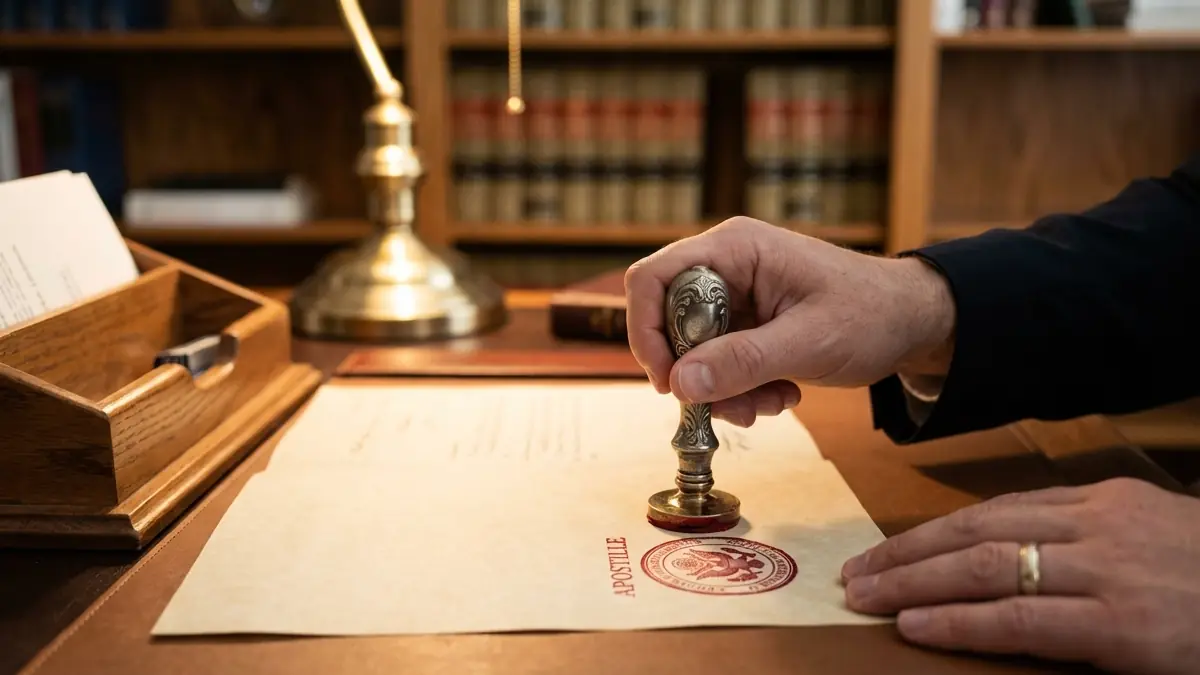
Notarial wax seal on civil records documents
Illustrative image; it does not represent an official document.

Many applicants for a Spain visa or residency focus on the FBI report and forget about another document type that shows up just as often in the same file: birth and marriage certificates. These civil records don't follow the same apostille route as the FBI report, and knowing the difference keeps you from sending the right document to the wrong office.

Quick summary

Birth and marriage certificates issued in the United States are apostilled by the Secretary of State of the state where the birth or marriage took place, not by the federal government. They're needed when a procedure requires proof of identity, parentage, or a family relationship, for example when including a spouse or dependent children in an application. Always confirm with your consulate whether your specific visa category requires these certificates, and whether they also need an official Spanish translation.

When civil records show up in a residency file

Not every Spain residency application requires civil records. They come up most often when the procedure involves more than one person: for example, when a spouse or partner is included in the application alongside the main applicant, when dependent children are included, or when the receiving authority needs to verify a family relationship for family reunification purposes. Our guide on the Spain digital nomad visa confirms this pattern: when a spouse, partner, dependent children, or dependent ascendants are included in the application, the relationship generally must be documented with the corresponding records, apostilled and translated when required.

If you're applying alone, without dependents, your file may not require any civil record at all. Don't assume you need to apostille your birth or marriage certificate without first confirming, with the consulate that has jurisdiction over you, whether your specific procedure requires it.

Why they follow the state route, not the federal one

Once you've confirmed you need the certificate, it's important to understand its apostille route. Unlike the FBI report, which is a federal document apostilled by the U.S. Department of State, birth and marriage certificates are issued by the vital records office of the state where the event occurred. That's why they're apostilled by that same state's Secretary of State, regardless of which state you currently live in or which country the document is headed to. If you were born in one state and married in another, you likely need two separate apostilles, one from each issuing state. We walk through this general rule, with more examples of state and federal documents, in state vs. federal apostille: how to tell which one you need.

A certified copy, not a photocopy

State apostille offices generally require a certified copy of the certificate, issued directly by the state's vital records office, and won't accept a photocopy or home printout of the original document you already have. If you don't have a recent certified copy on hand, the first step is usually to request a new one from the issuing state's vital records office, specifying that it's for an apostille procedure, before sending it to the relevant Secretary of State.

Translation and keeping the apostilled document intact

The receiving Spanish authority, whether the consulate or a civil registry in Spain, frequently requires an official Spanish translation of the complete certificate, in addition to the apostille. Confirm the exact scope of the translation with the receiving office, since some procedures also require the apostille text itself to be translated, not just the certificate. Once the set is apostilled, avoid separating the pages, removing staples, or otherwise altering the document: even an unintentional alteration can lead the receiving authority to reject it as tampered with.

Don't confuse this route with the FBI report's route

It's common for a single family's file to combine documents from different origins: an FBI report apostilled at the federal level for the main applicant, and one or more civil records apostilled at the state level to document the relationship with accompanying family members. Each document follows its own route and its own timeline, and grouping them into one submission doesn't mean they share the same apostille authority. If you're coordinating both document types for more than one person, our guide on how to coordinate FBI, marriage and financial documents when applying for Spain residency as a couple explains how to organize the full timeline.

FAQ

Frequently asked questions

Have more questions? Send us your specific case and we'll walk through it with you.

Do I always need to apostille my birth certificate for a Spain residency application?+
Not always. It depends on the visa or authorization category and on whether the procedure requires proof of identity, parentage, or a family relationship beyond your passport. Confirm the exact requirement with the consulate that has jurisdiction over your address.
Is a marriage certificate apostilled the same way as the FBI report?+
No. A marriage certificate is issued by the vital records office of the state where the marriage took place, and it's apostilled by that same state's Secretary of State. The FBI report is a federal document apostilled by the U.S. Department of State.
Can I use a printed copy of my certificate instead of a certified copy?+
Generally not. Apostille offices typically require a certified copy issued directly by the vital records office, not a home printout or photocopy of the original document.
What if my certificate is from a state I no longer live in?+
The certificate is apostilled by the state that issued it, not the state where you currently live. It's common to request the certified copy and apostille by mail or through an authorized third party when you no longer have direct access to that office.
Does my birth certificate also need a translation?+
Often, yes, in addition to the apostille. The receiving Spanish authority typically requires an official Spanish translation of the complete certificate, not just a summary. Confirm the exact requirement before proceeding.

Informational content only. Integramerica is not a law firm and does not provide legal or immigration advice. Requirements and final acceptance depend on the receiving authority. Integramerica provides document preparation, apostille, legalization, translation, and attorney referrals when appropriate; it does not determine visa eligibility. Official requirements last reviewed: August 2026.

Contact

Need to apostille a birth or marriage certificate for Spain?

Tell us which state issued the certificate, the destination country, and what procedure you need it for. We'll review the apostille and translation route before you incur unnecessary expense.

Request your document review

Add more details (optional)+
Call

Please do not include Social Security numbers, financial account information, or other highly sensitive personal data.

WhatsAppCallEmail