
Serving the U.S. and clients worldwide since 2004
Correct authority

I Got the Apostille From the Wrong State—Can It Be Fixed?
Practical guide · 7 min read · Published August 10, 2026

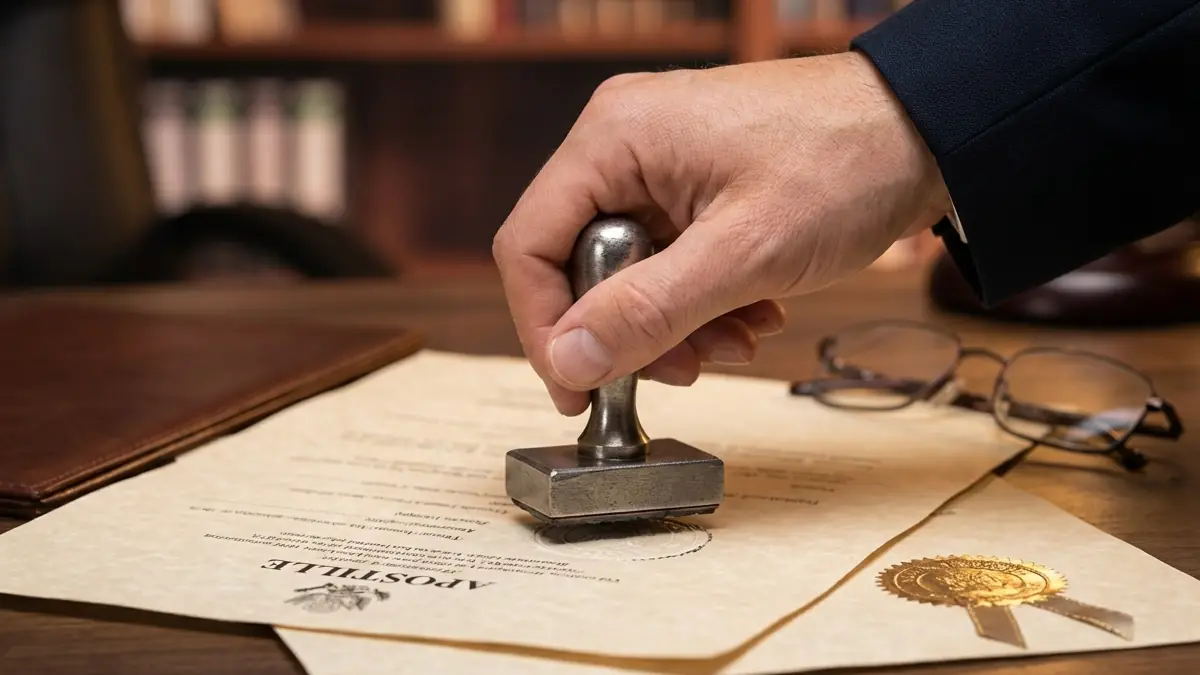
An apostille seal being applied to a document during the authentication process
Illustrative image; it does not represent an official document.

It's one of the most common mistakes, and one of the easiest to make without realizing it: requesting the apostille in the state where you live today, instead of the state that actually issued or certified the document. We already flagged it as one of the ten problems in our checklist on why was my apostille rejected?; here we explain in more detail why it happens and what options you have if it already happened to you.

The principle to remember

The apostille is issued by the state (or the federal authority) where the document was issued, notarized, or certified, never by the state where the person lives. If you got the apostille from the wrong state, there is generally no "correction": the document needs to be apostilled again through the correct authority.

The apostille follows the document, not the person

An apostille certifies the signature, seal, or title of the official who issued or certified the document. That's why the competent authority to issue it is always the one where that act took place — issuance, certification, or notarization — regardless of where the applicant lives today. A birth, marriage, or death certificate issued by New York follows New York's authority, even if the person has lived in Florida for twenty years. A notarization done before a California notary follows California's authority, even if the document will be used in another country while the applicant lives in a third state. The applicant's current state of residence, in most cases, simply is not a factor.

The special case of federal documents

Some documents do not follow any state's authority: an FBI background check, for example, requires a federal apostille, processed exclusively through the U.S. Department of State. No state, not even Florida, has jurisdiction to apostille a federal document. Confusing this category with a state document is another frequent variant of the same mistake: assuming any Florida apostille will do, when the document should never have gone through a state office in the first place. See the full distinction between the two types in our guide on state vs. federal apostille.

Can an apostille from the wrong state be "corrected"?

Generally speaking, there is no correction process for an apostille issued by an authority that had no jurisdiction over that document. The apostille certifies that the signature or seal is authentic according to the records of whoever issued it; if that authority never had the correct document in its system — because the act it authenticates happened in another state — the apostille cannot simply be "fixed" or transferred to the competent authority. Typically, the document needs to go through the apostille process again, this time through the correct state or federal authority. There is no general shortcut to avoid this step; avoid it in the first place by confirming the correct authority before requesting the apostille.

How to confirm the correct authority before you start

Check the document itself before deciding where to request the apostille: the office, registry, state agency, or notary named on it usually indicates the competent jurisdiction clearly. If you're unsure whether a document is state or federal, or which state applies, confirm it before paying for the process; it is cheaper to verify it first than to repeat the entire process afterward. If the rejection has already happened, ask for the reason in writing, as recommended in our full guide on what to do if a consulate rejects your apostilled document, to confirm that the wrong authority was in fact the cause before redoing the document.

Examples that help identify the correct authority

  • Birth, marriage, or death certificate. Follows the state that issued it. If you were born in Texas and now live in Florida, the certificate gets apostilled in Texas, not Florida.
  • A power of attorney signed before a notary. Follows the state where the notarization took place, not the signer's state of residence or the country where the power of attorney will be used.
  • A diploma or school transcript. Generally follows the state where the educational institution is authorized to certify the document, based on its own internal procedure.
  • An FBI background check. This is a federal document; it always requires a federal apostille through the U.S. Department of State, regardless of the applicant's state of residence.
  • A corporate document issued by a state's Secretary of State. Follows the state where the company is incorporated or registered, not the state where it operates or where its representative lives.

These examples illustrate the same general principle: the right question is not "where do I live?" but "which office signed, notarized, or certified this document?" When that point isn't clear, it's worth confirming before requesting any apostille.

FAQ

Frequently asked questions

Have more questions? Send us your specific case and we'll walk through it with you.

What determines which state should apostille my document?+
The state that issued, notarized, or certified the document, not the state where the person currently lives. A certificate issued by New York follows New York's authority; Florida cannot apostille it just because the applicant lives there.
Can I fix an apostille issued by the wrong state?+
There is no general "correction" process for an apostille issued by an authority that had no jurisdiction over the document. The document generally needs to be apostilled again through the correct state.
What about federal documents, like an FBI background check?+
Federal documents require a federal apostille, processed exclusively through the U.S. Department of State, not any state office. No state, including Florida, can apostille a federal document.
Is an apostille from the wrong state completely useless?+
As authentication for that specific document, generally yes, because it was not issued by the authority with jurisdiction over it. It cannot serve as a basis for a "correction"; the document normally needs to be apostilled again in the correct state.
How do I confirm the correct state before requesting the apostille?+
Check the document itself: the office, registry, or agency that issued, certified, or notarized it usually indicates the competent jurisdiction. If you are unsure, you can ask us before requesting the apostille.
Contact

Was your document apostilled in the wrong state?

Tell us which document you have, where it was issued, and which state apostilled it. We'll confirm the correct authority with you before you pay to repeat the process.

Request a check of the correct authority

Examples: Florida, New York, FBI, U.S. Department of State.
Add more details (optional)+
Call us

Please do not include Social Security numbers, financial account information or other highly sensitive personal data.

WhatsAppCallEmail