
Serving the U.S. and clients worldwide since 2004
Multi-state & federal coordination

How to Organize a Multi-Document Apostille Project Without Documents Expiring at Different Times
Practical guide · 9 min read · August 10, 2026

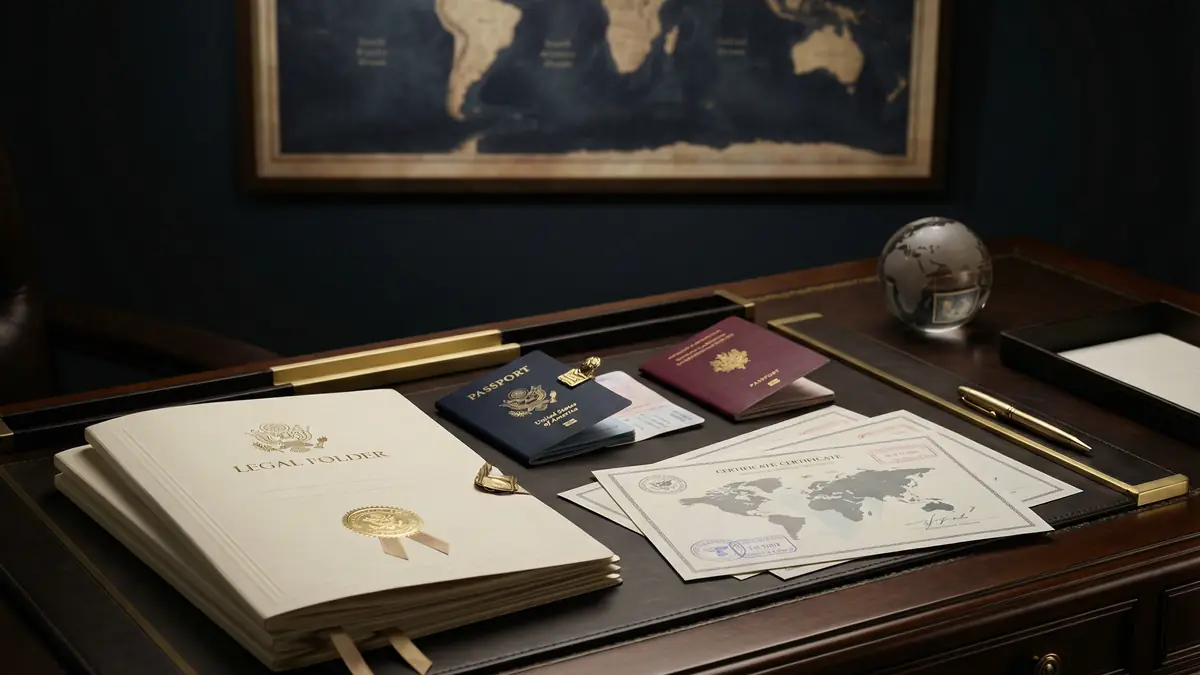
Folder with several documents organized for an international process
Illustrative image; it does not represent specific official documents.

When a single project involves several documents, each with its own origin and its own processing pace, it's easy to end up with some documents apostilled and ready while others are still in process, only to find that by the time the last one arrives, the first one has already passed the maximum age the destination accepts. This guide explains how to organize a multi-document project so the whole set arrives ready and valid at the same time.

Quick summary

To keep a multi-document project from expiring in pieces: 1) make a complete list of every document and its origin before requesting anything; 2) confirm with the destination the maximum age it accepts for each document, since this varies by country and by document type; 3) identify which documents tend to take longer or have the shortest validity window, and start those first; 4) request in parallel the documents that don't depend on each other; 5) keep a simple tracking list with the status of each one.

Why one project can expire in pieces

Each document in a project can come from a different authority: a state, a county, a federal agency. Each one has its own processing pace, which varies by office and by current workload, so it's not safe to assume every document moves at the same speed. Add to that the fact that the destination country may require a different maximum age for each document type, and it becomes easy for the fastest document to obtain to end up expiring while it waits for the rest to catch up. If your project combines documents from several states and the federal government, you may also find our guide on documents from several states and the federal government—can one apostille company handle everything? useful, where we explain how we coordinate that kind of full case.

Step 1: make the complete list before requesting the first document

Before requesting any document, write out the complete list: what the document is, who issues it, which state or agency it comes from, and which destination authority it's for. Seeing the whole project at once, before you start, is what lets you plan the right order instead of solving each document separately as a problem comes up.

Step 2: confirm the maximum age the destination accepts for each document

The acceptable validity window for an apostilled document is set by the receiving authority at the destination, and it varies by country and by document type; there is no general rule that applies to every case. Confirm in writing, for each document on your list, the maximum age that specific authority accepts before you request the document, not after. More than any other step, this is the one that prevents having to redo an entire process because one document expired while waiting on the rest.

Step 3: identify which documents need to move first

With the maximum accepted age confirmed for each document, compare that figure against how long it usually takes to obtain and apostille it. Processing times vary by state or agency and by current workload, so confirm the current estimates before planning around a specific date. In general, it's best to start with the documents that tend to take longer to process or that have the shortest maximum age at the destination, so they don't become the bottleneck for the whole project.

Step 4: take advantage of documents that don't depend on each other

A birth certificate from one state, an FBI background check, and a diploma from another state can normally be requested in parallel, because each process depends on a different authority and not on another document being ready first. Requesting in parallel, instead of finishing one document before starting the next, usually shortens the total project timeline, as long as each document is requested correctly from the start.

Step 5: keep a simple tracking list

A simple list, with one row per document and columns for issuing authority, request date, current status, and maximum accepted age, is enough to avoid surprises. Review it periodically to confirm that no document already apostilled is approaching its validity deadline while the others are still in process. In projects with more than two or three documents, this list is what makes the difference between delivering the whole set valid and having to redo a process because of an avoidable expiration.

Common mistakes that cause cross-expiration

  • Requesting documents in the order you happen to remember them, rather than the order they should move in based on maximum age and processing time.
  • Assuming every country accepts the same maximum age for the same document type.
  • Waiting until every document is complete before starting certified translation, when that can also be coordinated in parallel.
  • Not confirming the maximum accepted age with the destination until after the document has already been requested.
  • Not keeping a centralized record once the project involves more than two or three documents.

If you'd rather have us manage the full sequencing for you, send us your document list through our multi-state and federal apostille coordination page: we identify the authority and the recommended order for each document before you request anything.

FAQ

Frequently asked questions

Still have questions? Write to us with your specific case and we'll review it with you.

What's the first step in organizing a multi-document project?+
Make a complete list of every document, its origin, and the final destination, before requesting the first one. Seeing the whole project at once lets you plan the right order instead of solving each document as a problem comes up.
How do I know which document to request first?+
For each document, compare the maximum age the destination accepts against how long it typically takes to obtain and apostille. In general, it's best to start with the slower-moving documents or the ones with the shortest validity window at the destination.
Can I request several documents at the same time?+
Yes, as long as they don't depend on each other. Most documents from different states or agencies can be processed in parallel without issue.
Is the maximum accepted age the same in every country?+
No. It varies by country and by document type. Confirm the exact maximum age with the receiving authority for each document on your list.
What should I include in a tracking list?+
At minimum: the document, the issuing authority, the request date, the current status, and the maximum age the destination accepts.
Is it worth coordinating the whole project with one company?+
It can simplify tracking, since instead of monitoring each document separately you have one point of contact for the whole set.
Contact

Need help sequencing your project?

Send us the full list of documents, where each one comes from, the destination country, and your deadline if you have one. We'll propose the recommended order before you request anything.

Request help planning your project

Add more details (optional)+
Call

Please do not include Social Security numbers, bank account information, or other highly sensitive personal data.

WhatsAppCallEmail